
Today’s topic is Doyle & Co. which was a Victorian glassworks that operated from Birmingham, now known as South Side Pittsburgh, from about 1868 to 1891, when the glassworks was bought by U.S. Glass. Although they produced a variety of glassware, what is collected today is their early American pressed glass tableware which came in both clear and colored pieces.
You can still readily buy these pieces at online marketplaces, auctions and vintage/antique stores. Although the company produced glass for over 20 years, the volume of glass would have been much less than other glass houses of the day such as McKee and Adams. So by that simple measure, the glass is much more scarce.
The founders were:Joseph A. Doyle, who would have been 43 years old, his brother William, who was 40, John C. McCutcheon, who was 26, and William Beck, who was 32 years old. These founders had a great deal of glassworks experience.
The Doyle brothers established this works after leaving the partnership of Adams & Co.. By the time they established the works, each had over 30 years of experience in the trade.The factory’s location was next door to Adams & Co. on the South Side of Pittsburgh, PA.
#pittsburghhistory #antiqueglass #eapg #glassmanufacturing #victorian #antiquemaps #pressedglass #southsidepittsburgh
Transcript
[Intro music] 00:00:00:00 - 00:00:33:23
Hi, this is Melanie from Artifact and Landmark. Today's topic is Doyle and Co, which was a Victorian glasswork that operated from Birmingham, now known as Southside Pittsburgh, from about 1868 to 1891 when the glassworks were bought by U.S. Glass. Although they produced a variety of glassware, what is collected today is their early American press glass tableware, which came in both clear and colored pieces.
00:00:33:26 - 00:00:56:24
You can still readily buy these pieces at online marketplaces, auctions, and vintage and antique stores. Although the company produced glass for over 20 years, the volume of that glass would have been much less than other glasshouses of the day, such as McKee and Adams. So by that simple measure, the glass is much more scarce and for some, much more collectible.
00:00:56:26 - 00:01:21:08
It wouldn't be a video about glass without showing off a bit of it. You can visit the eapgs.net site to look through their database to find the variety of designs. Pieces can also be found at museums.
The first one that I'm going to show you is from the Chrysler Museum of Art's collection. This glass egg cup is in the "Lace" pattern.
00:01:21:11 - 00:01:52:05
This particular item was part of the 10,000 pieces that Walter P. Chrysler Jr. donated to the museum’s 30,000 piece collection. He was known to be an avid glass collector.
The patent for this design was given to Thomas Atterbury and assigned to William Doyle of Doyle & Co. in 1870. This line would be produced for decades. We can see it as part of this undated catalog which I believe is before 1880
00:01:52:08 - 00:02:18:06
due to the pitcher handles in the catalog which are applied and not molded. So this design would have been found also with press and applied handles, which also shows how long this line was produced. So I wanted to pause, to peruse this catalog. So the first thing you'll notice on the cover is the image of the glassworks, which I also have extracted and put into the video in another area.
00:02:18:07 - 00:02:59:08
Now we know they didn't have a fire until about ten years after the work was established, and so this may well be an image of their first buildings before these fires. And now we'll slowly make our way through the catalog, and you can see some of the earlier designs, and of course, take note of how these handles are applied.
00:02:59:11 - 00:03:09:00
And you can see it here. This is the page with the lace pattern and the applied handles.
00:03:09:02 - 00:03:36:05
An example of the pressed handles can be found in the Museum of American Glass in West Virginia and their collection. The design is number 200, and it's known among collectors as two bands.
So now that we've seen a little bit of the glass, let's dive into their history. When they began their business an early advertisement from 1869 advertises their glass as French flint glass.
00:03:36:10 - 00:04:01:26
We assume from what they're producing and what we know of their production, that this is French lime glass. And we can see the distinction between the types of flint glass, and the below analysis from 1883. Granted, this is a decade on, but this gives some insights into the composition of French flint glass versus O'Hara, which was a Pittsburgh glass manufacturer.
00:04:01:29 - 00:04:26:21
And you can just see the difference between the lime that was used, the potash or soda and silica. These aremain ingredients that make up line glass. In 1871, a few years after the first advertisement, we see the removal of the French specification, and now they're just calling it crystal glass in their advertisement, which at the time would refer to clear lime glass.
00:04:26:27 - 00:04:52:17
In both of those advertisements we'll also see who the founders are. First, we have Joseph Doyle, who would have been about 43 years old, his brother William, who would have been 40, John C McCutcheon, who would have been 26, and then William Beck, who would have been 32 years old when they established the firm. Now the Doyle brothers bring a great deal of glass manufacturing experience.
00:04:52:19 - 00:05:18:16
First of all, they've recently left the partnership with Adams and Co, another leading glass manufacturer in Pittsburgh. But by the time they established this works, they would have had each 30 years of experience in the trade. The factory's location would also be next door to Adams and Co, which you can see on this map from 1872. And again, this is that image from the catalog that we just perused.
00:05:18:19 - 00:05:53:02
Although the firm didn't experience fires in the first ten years, unlike many other glass works, Doyle and Co did experience a few disruptions to their operation, with the first one noted in 1871, when their only furnace collapses. They did rebuild as quickly as possible. If you watch some of our other videos, you know that disease was also common in Pittsburgh in the Victorian era, and we see Doyle and Co rise to the occasion when Pittsburgh experiences a large outbreak of smallpox in 1871.
00:05:53:05 - 00:06:22:11
We know that it reached its epidemic in November of 1871, with 92 out of 250 deaths attributed to the disease. In 1871, it's estimated that the disease will claim 400 lives. So two months prior, so this would be in September 1871, Doyle and Co did its part followed soon after by Atterbury and Co, another glassworks, by paying for their workforce to be vaccinated.
00:06:22:13 - 00:06:48:23
It would take many more months for the Board of Health, for Pittsburgh to provide free vaccinations. In 1876, Doyle's operation had one furnace and ten pots. The number of pots would increase to about 14 over the life of the company, but from this we can understand that their output would be pretty much capped out at the same amount throughout the life of the works.
00:06:48:25 - 00:07:13:12
And of course, it highlights too, that they did have the one furnace. So when anything happened to that one furnace, it did disrupt their business. So in 1877, around the ten year anniversary of the founding of the glassworks, we see two members part ways with a firm. The first is through, unfortunately, John C McCutcheon unfortunately passes
00:07:13:12 - 00:07:38:19
in January of 1877 of pneumonia at the young age of 35. And Joseph Doyle also leaves the firm, selling his share of the real estate of the company for $41,000. Joseph would then join Hill, Doyle and Co, a brush company, but then will quickly get back into the glass trade, joining Bryce, Higbee and Co and then again moving on to other ventures.
00:07:38:21 - 00:08:07:06
In that same year of 1877. The remaining partners of Doyle Co are William Doyle and William Beck. Now William Beck is related to Washington Beck, who was a leading mole producer at the time, with many patents. In 1878, the works experiences its first fire. The damage was severe and an earlier remark by William Beck just prior to the fire was captured in this article.
00:08:07:08 - 00:08:33:03
On entering the packing room, in which there was a great deal of combustible matter, he [William Beck] remarked to Mr. Doyle that "if ever fire got in there it would sweep things." "No danger of that," replied Mr. Doyle;" "we've been running here a great many years, and we've never had the slightest mishap." A few short hours after making that remark Mr. Doyle saw his works reduced to a mass of ruins.
00:08:33:06 - 00:09:00:25
They would rebuild their works. That said, within weeks their loss would eventually be published at $6,647, which is about $215,000 in today's money. For that same year, we'd see the following losses to Doyle and other works in the area.
So we we get our first indication in 1879, in terms of how much revenue the company Doyle and Co are generating.
00:09:00:27 - 00:09:29:06
In 1879, we see Doyle & Co. selling $90,000 of glass which is less than the leading tableware glassworks of the day which included McKee Brothers at over $228K, Bryce, Walker & Co. at over $171K, Adams & Co. at over $167K, and you can see others on this newspaper clipping.
In 1880, we see Doyle & Co. being robbed unusually by raft.
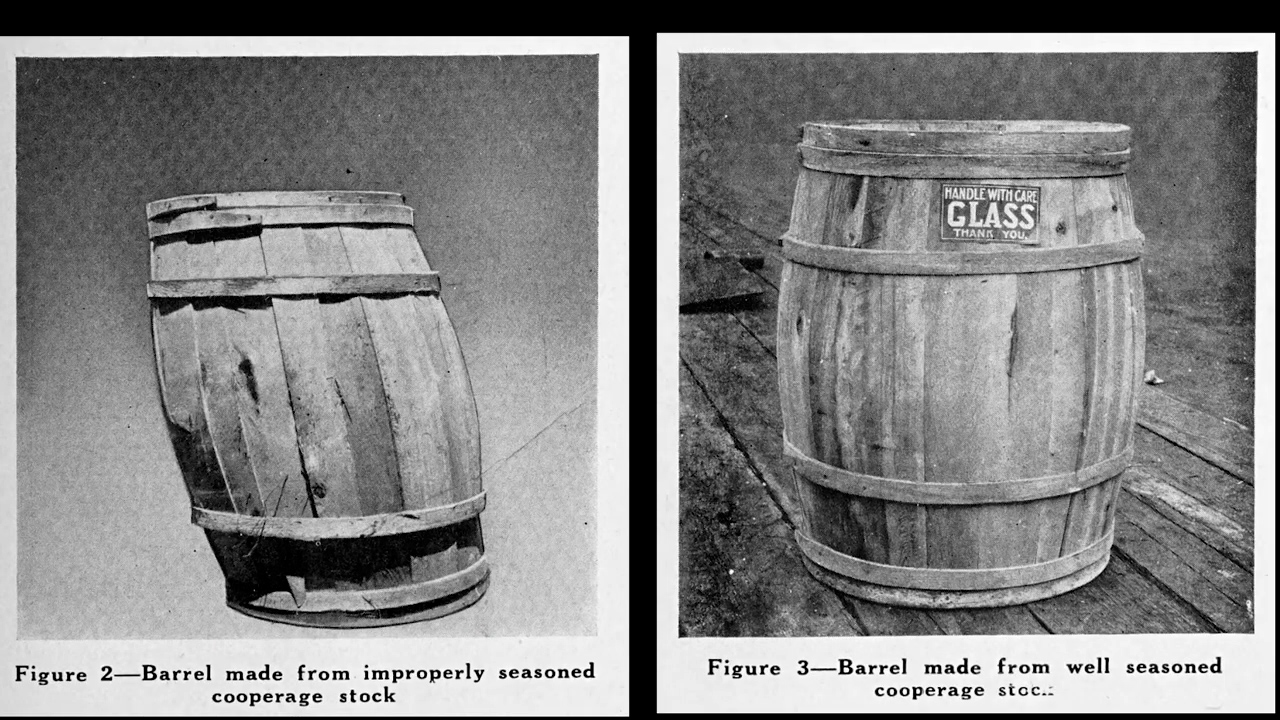
00:09:29:09 - 00:09:53:08
The young boys stole three barrels of glass. I will have a short that shows how glass was packed in these barrels in another video.
So although every year brought its challenges and we can see that every shutdown would shorten the glass production cycle, impacting the revenue. We can see this direct impact of the number of weeks versus the revenue they're generating.
00:09:53:14 - 00:10:21:13
First in 1880, you see, they've operated for 48 weeks, which is quite a long time when you consider that most classes shut down for 1 or 2 months over the summer. So it looks like they only shut down for about one month, in 1880 and they produced $100,000 worth of glass. But we can see the next year, in 1881, they only operated for 39 weeks, and they produced revenue of only about $71,000.
00:10:21:15 - 00:10:46:20
In April 1883, we see another disruption to their business when the foundation of the Doyle glassworks caved in. It's uncertain when they were able to start up their operations by may have actually been in 1884. So in 1884 we actually see reported that Doyle and Company is now using gas in their production instead of coal. In 1885, Doyle experiences yet another fire.
00:10:46:20 - 00:11:11:12
This time the loss is estimated at $25,000.
In 1886, William Doyle Jr. invites Henry Harley Pitt, of the Sowerby Glass Company, styled as Lemington Glass Works, Lemington, to tour their works. Henry Harley Pitt happened to be on a tour of the US.
00:11:11:15 - 00:11:34:24
The Leamington Glassworks was a large glassworks known for producing colorful glass and one has to wonder if the rumors around that time of an English glassworks acquiring many of the glassworks in Pittsburgh might be attached to this company. Now, Henry Harley Pitt would actually leave, the partnership of the Lemingtonglassworks just a few years later.
00:11:34:26 - 00:12:04:16
Again, not a stranger to accidents. That same year, in 1886, we see an explosion at the Doyle factory, which is almost cartoonish in its nature. One article reports its cause from the founder, William Beck, striking a match on the bottom of his boot to light a cigar while entering the work. A gas leak caused an immediate ignition of a gas, and managed to singe William Doyle's eyebrows and beard and burn his hands and face before he made his escape.
00:12:04:19 - 00:12:34:23
Although the building shook and I'm sure Doyle was shaken, the hay shed is reported to have burned down by the fire. In 1886, we see Doyle's revenue of over $120,000 versus revenue for the leading glassworks of the day, such as Adams and Co, with $225K. George and Macbeth and Co was $220K, Atterbury and Co was $135,000, and Phoenix Glass Co with $60,000.
00:12:34:25 - 00:12:56:22
Now the glass workers obviously had personal lives that sometimes spilled into the work. In 1888, we see a dramatic example of this. The employee is Henry Gerstman and he was a mold maker for Doyle and co. One day he served with a warrant for deserting his wife. He was told to either pay the bail or to accompany the constable.
00:12:56:24 - 00:13:28:05
It's unclear if Henry understood the constable's request due to a language barrier, but Henry decides to pull out a gun and shoot the constable. Luckily, he misses him, but a warrant is issued for his arrest for assault and battery, but he escapes to Germany. But that wasn't the end of the story, which we'll cover in another video.
By 1889, the reported revenue for Doyle and Co has dipped to $78,000, while other glassworks such as Adams and Co were earning over $194,000.
00:13:28:05 - 00:14:03:22
George Duncan and Sons earned $225,000, George Macbeth and co earned $167,000, Ripley and Co earned $181,000, and Atterbury and Co earned $150,000 in 1891.
We also see an example of the discord that could happen at the glassworks. In this case, tempers flared and at the end of a work day at the Doyle works. An argument between some of the female workers at the factory rose to the level of involving the police, although no arrests were made one article reports.
00:14:03:22 - 00:14:28:07
The arguments attracted 500 local workers as spectators.
That same year, in 1881, we see Doyle and Co join the US Glass Company as Factory P and this was the end of the glass company as we knew it. We do know that the location was operated to produce glass, and it may have actually produced also some of O'Hara's patterns.
00:14:28:09 - 00:14:42:08
So that's it for this episode. Join us next time to find out what happened to the Doyle brothers.